Wednesday, July 25, 2007

Hope for Darfur

Stand In for Peace in Darfur
Credits
The international community’s response to the crisis in Darfur has been slow, weak, piecemeal, and wholly inadequate. By standing in for Human Rights First’s Six Part Plan for Peace in Darfur, you are joining tens of thousands of other concerned global citizens who want to see the violence in Darfur end now. Our plan identifies six elements for ending the violence in Darfur: human security, the humanitarian effort, the peace process, political will, regional security, and foundations for the future. In the coming weeks and months, we will reach out to you at key moments to support action leading to an enduring peace in Darfur. For example, we will be releasing a report this fall that examines the close and problematic relationship between China and Sudan. China’s increasing presence and expanding economic interests in Sudan give it leverage with the Sudanese government in helping ensure peace in Darfur. We will ask you to raise your voices to make specific demands on China.Stand in for the victims of mass atrocities in Darfur and help us to build a lasting peace in western Sudan.
When you sign up, you will join 34,817 others who are symbolically representing an individual victim who has been killed, harmed or displaced in Darfur. Won’t you join us in supporting a comprehensive plan for peace in Darfur?
(...).
Link,http://www.humanrightsfirst.org/international_justice/darfur/voices/index.aspx?source=flash, consultado a 25 de Julho de 2007.

Tuesday, July 24, 2007

«Conseil» ou «Commission», les droits de l'homme en otage à l'ONU

Jean-Claude Bührer, ancien correspondant du journal «Le Monde» à l'ONU, analyse le fonctionnement du nouveau Conseil et le voit surtout instrumentalisé par ses adversaires.
Auteur de «Sergio Vieira de Mello, un espoir foudroyé», Mille et une nuits, 2003 et 2004.
Paru dans Le Temps (journal Suisse) le Mardi 12 juin 2007


Va-t-on regretter la défunte Commission des droits de l'homme qui avait sombré dans le discrédit après 60 ans d'existence? Le nouveau Conseil qui lui a succédé il y a un an est loin d'avoir répondu aux attentes. A en juger par le déroulement chaotique de ses quatre premières sessions et compte tenu des obstacles encore à surmonter dans la mise en place de ses règles de fonctionnement avant l'échéance du 18 juin, c'est à se demander si le remède n'est pas pire que le mal.
Déjà le compromis adopté le 15 mars 2006 par l'Assemblée générale lors de la création du nouvel organe était en deçà du projet initial plus ambitieux de Kofi Annan, ce qui avait entraîné l'opposition des Etats-Unis qui d'ailleurs s'en tiennent toujours à l'écart. Au vu de la première donne, les dés apparaissaient d'emblée pipés: Algérie, Arabie saoudite, Azerbaïdjan, Bangladesh, Chine, Cuba, Nigeria, Pakistan, Russie et Tunisie - autant de membres du Conseil qui ne sont pas précisément des parangons de vertu dans ce domaine. Comme naguère à la Commission, marchandages et manœuvres de coulisses ont présidé à leur élection, si bien qu'un bon tiers d'entre eux sont affiliés à l'Organisation de la conférence islamique (OCI). Alors que les candidats devaient s'engager à respecter «les normes les plus élevées en matière de droits de l'homme», près de 90% des exécutions capitales en 2005 enregistrées dans le monde l'ont été dans des pays membres du nouveau Conseil, avec la Chine nettement en tête du palmarès.
Instrumentalisé dès le début par le groupe islamique (17 sièges sur 47) et d'autres pays répressifs, le Conseil n'a pas tardé à renouer avec les pires travers de feu la Commission: même indignation sélective, fixation tout aussi systématique sur Israël, obstruction récurrente sur le drame du Darfour et d'autres situations d'urgence, même travail de sape et tractations sur les procédures et mécanismes à mettre en place.
Les Etats liberticides font désormais la loi et ont obtenu ce qu'ils voulaient: ne plus être nommément montrés du doigt, à l'exception bien sûr d'Israël qui se retrouve comme naguère seul au banc des accusés. En un an, aucun autre pays n'a été mis directement en cause, ni la Chine, ni Cuba, ni la Russie, ni la Birmanie, ni le Zimbabwe, ni la Biélorussie, ni la Corée du Nord, et encore moins un quelconque régime musulman. Ainsi l'Arabie saoudite continue impunément de discriminer les femmes et de recourir aux châtiments corporels, malgré son adhésion à la Convention contre la torture. En plus de la surenchère habituelle sur le Proche-Orient et sans faire avancer d'un pouce la recherche d'une solution politique, le groupe islamique a enfourché un autre cheval de bataille, «la diffamation des religions», en faisant approuver une nouvelle résolution anti-blasphème qui ne se réfère qu'à l'islam, avec pour corollaire la limitation des droits individuels et de la liberté d'expression.
Des innovations avaient pourtant été prévues pour ne pas retomber dans les dérives du passé, comme l'examen périodique universel - un mécanisme de contrôle de tous les Etats en matière de respect des droits de l'homme. Mais c'en était trop pour les pays peu soucieux de ces droits, qui se sont empressés de mettre des bâtons dans les roues à leur convenance. Ils sont même allés plus loin en cherchant à amoindrir le statut des ONG et à supprimer les mandats des enquêteurs par pays, tout en renforçant le contrôle sur les procédures thématiques. En fait, sous l'emprise d'une majorité automatique, le nouveau Conseil est en train de vider de leur substance les principes qu'il est supposé promouvoir et défendre. Sans crier gare, on assiste à une tentative sournoise de démantèlement du système onusien des droits de l'homme patiemment mis en place au lendemain de la Seconde Guerre mondiale. Les victimes pourront toujours attendre.
Sergio Vieira de Mello, le haut-commissaire décédé lors de l'attentat contre le siège de l'ONU à Bagdad en 2003, était conscient des carences de la Commission mais aussi des risques d'une réforme précipitée. Pour lui, le problème était moins dans la Commission que dans l'absence de volonté politique de mettre en œuvre le cadre normatif impressionnant élaboré depuis sa création. «Mettre le doigt dans l'engrenage de la réforme, c'est faire le jeu de ceux qui veulent casser le système, disait-il. La Commission va mal, elle a besoin d'une thérapie, mais prudence pour ce qui est d'une réforme radicale et hâtive.» Les faits semblent lui donner raison. Comme si ses assassins avaient visé justement le symbole des droits de l'homme qu'il personnifiait.
Jean-Claude Bührer
Link,
http://www.prochoix.org/cgi/blog/index.php/2007/06/14/1640-conseil-ou-commission-les-droits-de-l-homme-en-otage-a-l-onu, consultado a 24 de julho de 2007

Thursday, July 12, 2007

United Nations Foundation

(...)The UN Foundation makes it easy to engage in the work of the UN. As a platform for partnering with the UN, we help corporations, foundations, governments, and individuals make a difference in the important work the UN does across a broad range of issues. Our role in these partnerships varies—from catalyst to convener, advocate to grantmaker, fiduciary to fundraising ally—but in each case, we are able to achieve an outcome that is greater than what any single actor would have accomplished working alone. These efforts are conducted in close coordination with the United Nations Fund for International Partnerships (UNFIP), our strategic counterpoint within the UN system.(...).
Multimedia: UN Foundation Television
Peace, Security & Human Rights
The UN Foundation's Peace, Security and Human Rights program promotes preventive engagement in three areas–security, well-being and justice–in an integrated effort to alleviate the root causes of conflict while seeking to avoid crises by promoting the peaceful management of the massive changes that are confronting every nation in the international system.The UN Foundation formalized its commitment to the causes of peace and human rights by launching the Program on Peace, Security and Human Rights in 1998, emphasizing conflict prevention and the promotion of human rights. While previous work in this field supported a variety of humanitarian causes, the UN Foundation tightened its focus to advance specific initiatives of the Secretary-General and the UN system that emphasize preventive action. The UN Foundation focuses its Peace, Security & Human Rights grantmaking on the following priority areas:•Conflict Prevention.•Human Rights.•Peace Building.
Click here for more detail.
Click here to see our grants
Link,http://www.unfoundation.org/programs/campaigns.asp, consultado a 12 de Julho de2007.

Wednesday, July 11, 2007

Centro das Nações Unidas no Brasil

Páginas em Português
Link,http://www.un.org/spanish/Depts/dpi/portugues/index.htm, 11 de Julho de 2007.

ORGANIZAÇÕES INTERNACIONAIS EM QUE PORTUGAL PARTICIPA

Apenas se incluem as Organizações Internacionais Intergovernamentais (OI) em que Portugal participa como membro ou com o estatuto de observador ou equivalente. (...).
Link,http://www.fd.uc.pt/CI/CEE/OI/org_int_notas.htm, consultado a 11 de Julho de 2007.

UE/Presidência: o Secretário Geral das Nações Unidas,Ban Ki-moon, saúda prioridade de Portugal a África

Número de Documento: 7270835 Lisboa, Portugal 09/07/2007 15:45
(LUSA) Temas: Política, Diplomacia, UE/Presidência
Lisboa, 09 Jul (Lusa) -
O Secretário-Geral da ONU, Ban Ki-moon, saudou hoje a prioridade atribuída por Portugal a África para a sua presidência da União Europeia e disse-se esperançado num «reforço da cooperação com a União Africana». «Aprecio muito essa opção estratégica. O relacionamento com África também está no topo da minha agenda (…) e espero que durante a presidência portuguesa seja possível estreitar a cooperação com a União Africana», declarou o secretário-geral das Nações Unidas. (...).
Timor-Leste foi outro dos assuntos abordados por Ban Ki-moon nos seus encontros em Lisboa, para «agradecer e elogiar a participação activa do governo português em Timor». Questionado sobre o futuro, o Secretário-Geral da ONU saudou «as eleições presidenciais (09 de Abril e de 09 de Maio) e legislativas (30 de Junho) bem sucedidas». «Esperamos que a União Europeia e que Portugal continuem a apoiar Timor-Leste no seu processo de reconstrução e o ajudem a ultrapassar os problemas económicos e sociais», declarou. Sobre a situação no Médio Oriente, designadamente o possível envio de uma força multinacional para os territórios palestinianos, Ban Ki-moon reiterou a necessidade de se alcançar uma solução política no âmbito dos esforços do Quarteto formado pelos Estados Unidos, Rússia, UE e ONU. «Continuamos a acreditar numa solução política no quadro do quarteto e continuamos a apoiar a liderança do presidente (Mahmud) Abbas», declarou. A situação nos territórios, onde depois de semanas de confrontos interpalestinianos o movimento radical Hamas assumiu o controlo da Faixa de Gaza e disputa a liderança com a mais moderada Fatah do presidente Mahmud Abbas, «é fonte de grande preocupação», disse Ban Ki-moon. «A ONU tem grandes responsabilidades humanitárias nos territórios. Estamos a dar assistência a 1,4 milhões de palestinianos em Gaza. Ainda temos limitações e precisamos que os pontos de passagem sejam abertos para podermos canalizar a assistência mais facilmente», (...).
Link,http://www.lusa.pt/lusaweb/user/showitem?service=284&listid=NewsList284&listpage=1&docid=7270835, consultado a 11 de Julho de 2007.

International Institute for Democracy and Electoral Assistance (International IDEA)

The International Institute for Democracy and Electoral Assistance (International IDEA) is an intergovernmental organization that supports sustainable democracy worldwide. Its objective is to strengthen democratic institutions and processes.
International IDEA acts as a catalyst for democracy building by providing knowledge resources, expertise and a platform for debate on democracy issues. It works together with policy makers, donor governments, UN organizations and agencies, regional organizations and others engaged in democracy building. (...).
International IDEA’s areas of expertise include: constitution-building processes, electoral processes, political parties, democracy and gender, and democracy assessments. The Institute offers:
Knowledge resources, in the form of expert networks, databases, handbooks and websites;
Policy proposals to provoke debate and action on democracy;
Assistance with democratic reform in response to specific national requests.(...).
Link,http://www.idea.int/about/index.cfm, consultado a 11 de Julho 2007.

Sunday, July 08, 2007

About Amnesty International

Amnesty International (AI) is a worldwide movement of people who campaign for internationally recognized human rights to be respected and protected.
AI’s vision is for every person to enjoy all of the human rights enshrined in the Universal Declaration of Human Rights and other international human rights standards.
AI’s mission is to conduct research and take action to prevent and end grave abuses of all human rights – civil, political, social, cultural and economic. From freedom of expression and association to physical and mental integrity, from protection from discrimination to the right to shelter – these rights are indivisible.
AI has 2.2 million members and supporters in more than 150 countries and territories. Funded largely by its membership and public donations, AI is independent of any government, political ideology, economic interest or religion. No funds are sought or accepted from governments for investigating and campaigning against human rights abuses.
AI is a democratic movement. Major policy decisions are taken by a two-yearly International Council made up of representatives from all national sections. The Council elects an International Executive Committee which carries out its decisions.
The Committee’s members elected for 2005-7 were Soledad García Muñoz (Argentina), Ian Gibson (Australia), Lilian Gonçalves-Ho Kang You (Netherlands, Chair from September 2006), Petri Merenlahti (Finland), Claire Paponneau (France), Vanushi Rajanayagam (New Zealand), Hanna Roberts (Sweden), and David Weissbrodt (USA). AI’s Secretary General is Irene Khan (Bangladesh). (...).

If you want to include and use any of these videos on your site, please visit http://www.youtube.com/AmnestyInternational

Homepage > Video, Audio and Photos > Video Clips

Link,http://thereport.amnesty.org/eng/Homepage, consultado a 8 de Julho de 2007.

Thursday, July 05, 2007

Inter Press Service (IPS)

Direitos Humanos

Nações Unidas: Uma nova estrutura para os Direitos Humanos

(Gustavo Capdevila)
Genebra, 21/06/2007(IPS)
O novo sistema de direitos humanos da Organização das Nações Unidas finalmente definiu seu contorno jurídico, graças ao entendimento obtido através de uma inédita aliança entre os países do Sul e a União Européia que deixou isolados Estados Unidos e Canadá. O Conselho de Direitos Humanos, criado em março de 2006 pela Assembléia Geral em substituição à desacreditada Comissão de Direitos Humanos, ganhou esta semana o arcabouço institucional que deverá permitir que cumpra sua missão de promover e proteger essas garantias fundamentais.A estrutura do novo órgão mantém, embora com variantes, alguns mecanismos da desaparecida Comissão, mas introduz certas inovações polêmicas, como a implantação de um código de conduta para os especialistas independentes que colaboram com a ONU ou a supressão dos relatores especiais para Bielorússia e Cuba. Mas a grande novidade do Conselho será a implementação de um mecanismo de exame periódico da vigência dos direitos humanos em todos os países. Este procedimento, que deverá começar a partir da próxima sessão do organismo, em setembro deste ano, ocupará gradualmente as funções dos relatores por países designados para investigar casos de abusos graves.A elaboração dos mecanismos de “edificação institucional” do sistema de direitos humanos consumiu mais de um ano de debates, e o acordo só foi possível depois de um entendimento político entre blocos regionais que tradicionalmente atuam distanciados. A delegação de Cuba descreve essa aliança ao explicar com satisfação como obteve a eliminação do mandato da especialista da ONU Christine Chanet, encarregada de acompanhar as violações de direitos humanos nesse país.O apoio do Movimento de Países Não-alinhados e de outras nações em desenvolvimento foi essencial para conseguir esse equilíbrio, disse a representação do governo cubano. “Até os países da União Européia, aliados permanentes dos Estados Unidos em suas ações contra nosso país” na antiga Comissão de Direitos Humanos “não tiveram outra opção que não a de aceitar” o fim do mandato contra Cuba, acrescenta a declaração. Os textos aprovados pelos 47 Estados integrantes do Conselho receberam comentários favoráveis desses governos e também dos países observadores. As organizações da sociedade civil demonstram cautela e, no geral, receberam com receio a criação do código de conduta. O documento aprovado por consenso “é um bom texto, sobretudo se comparado com as declarações negativas feitas por alguns Estados durante o último ano”, afirmou Adrien Claude Zoller, da ONG Genebra pelos Direitos Humanos. Entretanto, Zoller esclareceu à IPS que, “naturalmente, as organizações defensoras dos direitos humanos esperavam mais”.A Federação Internacional dos Direitos Humanos (FIDH), com sede em Paris e Genebra, disse que embora não esteja totalmente satisfeita com os resultados sente-se aliviada porque a grande maioria dos mecanismos de proteção criados pela antiga Comissão foram confirmados. Por sua vez, a ONG Human Rights Watch, com sede em Nova Yok, considerou que a eliminação dos mandatos de relatores para Bielorússia e Cuba foi negociada em troca da manutenção dos especialistas que investigam violações na Birmânia, Libéria, Burundi, República Democrática do Congo, Haiti, Coréia do Norte, Palestina, Somália e Sudão.O representante do México, Luis Alfonso de Alba, presidente do Conselho em seu primeiro ano de funcionamento, afirmou que a estrutura institucional do novo organismo melhora substancialmente o esquema da antiga Comissão. O diplomata mexicano, que na terça-feira entregou a presidência ao delegado da Romênia, Doru Costea, admitiu que para conseguir o documento final “tivemos de assumir compromissos”. Não é um texto perfeito, afirmou.A única delegação que questionou o acordo foi a do Canadá, que objetou a inscrição na ordem do dia do Conselho, como tema permanente, da questão dos territórios palestinos ocupados. Os canadenses reprovaram que, por outro lado, os mandatos sobre outros países, que possuem uma data limite e a eliminação dos relatores para Bielorússia e Cuba. Os Estados Unidos concordaram com estes argumentos. O chefe da delegação norte-americana, Warren Tichenor, afirmou que as questões referentes a Palestina, Bielorússia e Cuba criam sérias dúvidas sobre as prioridades institucionais do Conselho. Tichenor afirmou que a estrutura jurídica do órgão é imperfeita.Zoller interpretou que a representação canadense atuou dessa maneira por ter recebido instruções. É “um governo pró-Bush”, insistiu, numa referência ao presidente dos Estados Unidos, George W. Bush. O especialista de Genebra para os direitos humanos considerou que a delegação canadense já não se assemelha às enviadas por esse país à Comissão na década de 90 e começo da atual. Mudou, ressaltou. Na terça-feira os canadenses tentaram fazer o Conselho rever a decisão adotada na meia-noite do dia anterior de aprovar os textos apresentados por Alfonso de Alba.O novo presidente, Costea, colocou em votação a pretensão canadense, que foi rejeitada por 46 votos contra um, do próprio Canadá. O resultado desta consulta mostrou o entendimento alcançado entre os cinco grupos regionais, América Latina e Caribe, África, Ásia, Europa do Leste, Europa Ocidental e outros. O Canadá não obteve nenhum apoio. O fato de o governo desse país reclamar e questionar tudo novamente, depois das intensas negociações, é totalmente irresponsável, afirmou Zoller. E, certamente, não se deve culpar o embaixador canadense. Foi seu governo e provavelmente os Estados Unidos que pediram sua intervenção”, afirmou.Em sua primeira reunião do segundo ano de sessões, o Conselho aprovou a proposta do representante brasileiro, Sérgio de Abreu e Lima Florêncio, para a designação das personalidades que acompanharão Costea na mesa da presidência. A função de relator do Conselho ficou para o representante permanente do Uruguai, Alejandro Artucio, do grupo da América Latina e Caribe. Os três vice-presidentes eleitos são Mohamed-Siad Doualehof, de Djibuti, pelo grupo da África; Boudewijin Van Eenennaam, da Holanda, pelo Grupo da Europa Ocidental e outros países; e Dayan Jayathilake, do Sri Lanka, pelo grupo da Ásia. (IPS/Envolverde) (FIN/2007)
Link,http://www.ipsnews.net/
,consultado a 5 de Julho de 2007.

Wednesday, July 04, 2007

Portuguese Presidency of European Union


Link,http://www.eu2007.pt/UE/vEN/Conheca_a_UE/, consultado a 4 de Julho de 2007

Human Rights Watch (HRW)

About HRW
Human Rights Watch is dedicated to protecting the human rights of people around the world.
We stand with victims and activists to prevent discrimination, to uphold political freedom, to protect people from inhumane conduct in wartime, and to bring offenders to justice.
We investigate and expose human rights violations and hold abusers accountable.
We challenge governments and those who hold power to end abusive practices and respect international human rights law.
We enlist the public and the international community to support the cause of human rights for all.
Human Rights Watch is an independent, nongovernmental organization, supported by contributions from private individuals and foundations worldwide. It accepts no government funds, directly or indirectly.
Contribute today or view HRW's financial statements first. (...).


Human Rights Watch is working to document and end human rights abuses in Darfur. Help us continue our work. Please contribute today.

Link, http://hrw.org/, consultado a 4 de julho de 2007.

Tuesday, July 03, 2007

World Business Council for Sustainable Development (WBCSD)

The WBCSD’s Regional Network is an informal alliance some 60 CEO-led business organizations around the globe that are united by a shared commitment to providing business leadership for sustainable development (SD) in their respective countries or regions.
While the WBCSD makes the business case on the world stage, its Regional Network helps shape the sustainable development agenda at the local and regional levels. Regional partners run numerous cutting-edge initiatives to implement sustainable practices on the ground and cooperate with decision-makers in creating framework conditions for business to effectively contribute to sustainable development. They also provide a platform for companies to address supply chain issues and engage with small and medium enterprises (SMEs).
These partner organizations are mostly, but not exclusively, known as Business Councils for Sustainable Development (BCSDs) and have a membership that comprises leading local companies and subsidiaries of foreign enterprises, many of which are members of the WBCSD. ( ... ).
Link,http://www.wbcsd.org/templates/TemplateWBCSD5/layout.asp?type=p&MenuId=NjM&doOpen=1&ClickMenu=LeftMenu, consultado a 3 de Julho de 2007.

Monday, July 02, 2007

International Trade Forum


Human Rights Education Associates (HREA)

(...).Human Rights Education Associates (HREA) is an international non-governmental organisation that supports human rights learning; the training of activists and professionals; the development of educational materials and programming; and community-building through on-line technologies. (...).

Global Issues
Children's rights
Dealth penalty
Gay and lesbian rights
Humanitarian law
Human rights crisis in Darfur
Racism and xenophobia
Refugees
Rights of the disabled
Rights of the elderly
Sustainable development
Torture

Link,
http://www.hrea.org/index.php
, consultado a 2 de julho de 2007

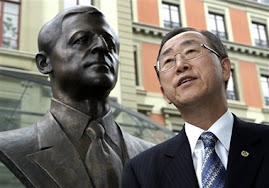
UN Secretary-General, Ban Ki-moon, speaks in front of the bust of late High Commissioner for Human Rights, Sergio Vieira de Mello, during a homage

From left to right: Laurent and Adrian de Mello, sons of Sergio Vieira de Mello, his wife Annie de Mello, sculptor Zurab Tsereteli, listen to United Nations Secretary-General Ban Ki-moon, speaking in front of a bust of late High.Commissioner for Human Rights, Sergio Vieira de Mello, during a homage held outside the Palais Wilson, headquarters of the Office of the United Nations High Commissioner for Human Rights (OHCHR) in Geneva, Switzerland, Sunday, July 1, 2007. The bronze likeness rests upon a plinth which carries the names of Sergio Vieira de Mello and the other twenty-one colleagues who lost their lives in the bombing of UN headquarters in Iraq on 19 August 2003.
(AP Photo/KEYSTONE/Martial Trezzini).


United Nations Secretary-General, Ban Ki-moon and Annie de Mello, widow of late High Commissioner for Human Rights, Sergio Vieira de Mello, during a homage held outside the Palais Wilson, headquarters of the Office of the United Nations High Commissioner for Human Rights (OHCHR) in Geneva, Switzerland, Sunday, July 1, 2007.
(AP Photo/KEYSTONE/Martial Trezzini)

Sunday, July 01, 2007

Center for UN Reform Education

Home » Who We Are

Mission and History
Our MissionThe Center for U.N. Reform Education is an independent, non-partisan, non-profit policy research organization. Founded in 1978, the mission of the Center is to encourage, generate and sustain discussion of various specific proposals to reform and restructure the United Nations through its website; its monographs, papers and books; and its fora and conferences.
Our HistoryThe Center for U.N. Reform Education was founded in 1978 following a conference on U.N. reform at Villanova University. Over the last 28 years the Center has filled an important gap in the U.N. community by publishing cutting edge research on mid-term and long-term proposals on the reform of the United Nations system. By doing so, the Center has promoted discussion on issues including weighted voting, E-democracy, and restructuring of the U.N.'s principal organs including the Security Council and the General Assembly. Following the Secretary General's reform initiative in March 2005, the Center has expanded its research agenda to include the proposals put forward by the Secretary General. Through its website, the Center also aims to promote discussion on ways to improve the selection process of the Secretary General. The Center is associated with the Department of Public Information (DPI) at the United Nations. The Center does not take positions regarding specific proposals.
Link, http://www.centerforunreform.org/node/13, consultado a 3 de julho de 2007

Saturday, June 30, 2007

Os Direitos Humanos no Mundo


Memorial to honour Sergio Vieira de Mello and 21 other people killed during the August 19, 2003 bombing


UN High Commissioner for Human Rights Louise Arbour speaks at the unveiling of the bust of Sergio Vieira de Mello as former UN Secretary-General Kofi Annan (left) listens. © UNHCR/S.Hopper


Name Age Nationality Position
Sergio Vieira de Mello, 55 (Brazil):UN Secretary-general's special Iraqi envoy
Saad Hermiz Abona, 45 (Iraq): working for UN contracting firm
Renam Al-Farra, 29 (Jordan): an employee of the UN Office for the Coordination of Humanitarian Affairs
Raid Shaker Mustafa Al-Mahdawi, 32 (Iraq): United Nations Monitoring, Verification and Inspection Commission (UNMOVIC)
Emaad Ahmed Salman Al-Jobary, 45 (Iraq): Electrician for UNMOVIC
Omar Kahtan Mohamed Al-Orfali, 34(Iraq): Driver
Leen Assad Al-Qadi, 32 (Iraq): UN Office for the Coordination of Humanitarian Affairs in Iraq (UNOHCI)
Ranillo Buenaventura, 47 (Philippines): UNOHCI
Gillian Clark, 47 (Canada): Christian Children's Fund
Arthur Helton, 54 (United States): director of peace and conflict studies at the US Council on Foreign Relations.
Richard Hooper, 40 (United States): UN Department of Political Affairs
Reza Hosseini, 43 (Iran): employed by UN Office for the Humanitarian Coordinator in Iraq
Ihsan Taha Husein, 26 (Iraq): UN driver for office of project services
Jean-Sélim Kanaan, 33 (Egypt): Member of Vieira de Mello's staff
Chris Klein-Beekman, 32 (Canada): UN Children's Fund's program coordinator
Manuel Martín-Oar, 56 (Spain): naval captain, assistant to the Spanish special ambassador to Iraq
Khidir Saleem Sahir, (Iraq): Civilian
Alya Souza, 54 (Iraq): worked for the World Bank
Martha Teas, 47 (United States): manager of UN humanitarian coordination office
Basim Mahmoud Utaiwi, 40 (Iraq): Security guard for UNOHCI
Fiona Watson, 35 (Britain): Member of Vieira de Mello's staff
Nadia Younes, 57 (Egypt): Chief of Staff for Vieira de Mello


Former Secretary General Kofi Annan unveils a bust of the late Sergio Vieira de Mello outside the headquarters of the Office of the High Commissioner for Human Rights. The bust is in memory of the former High Commissioner and the twenty-one others who lost their lives in the bombing of the UN's headquarters in Iraq on 19 August 2003.


Annie de Mello, center, widow of late Brazilian Sergio Vieira de Mello, former High Commissioner for Human Rights, and one of her sons, right, greet a member of the de Mello's former security team, during a ceremony to unveil a bust of Sergio Vieira de Mello, outside the Palais Wilson, headquarters of the Office of the United Nations High Commissioner for Human Rights (OHCHR) in Geneva, Switzerland, Thursday, June 28, 2007.(...).(AP Photo/Keystone/Martial Trezzini).

Actualização a 20 de Março de 2008,
2007 Unveiling of Segio's bust at Palais Wilson, Geneva.
Link, http://sergiovdmfoundation.org/en/multimedia.html, consultado a 20 de Março de 2008

Thursday, June 28, 2007

Friday, October 20, 2006

Unesco Library

UNESCO - the United Nations Educational, Scientific and Cultural Organization (UNESCO) was founded on 16 November 1945. For this specialized United Nations agency, it is not enough to build classrooms in devastated countries or to publish scientific breakthroughs. Education, Social and Natural Science, Culture and Communication are the means to a far more ambitious goal : to build peace in the minds of men.(...).

United Nations System website

Directory of UN Information Centres
Official Web Locator for UN-System of Organizations
Official documents of the UN
UN Bibliographic Information System (UNBISnet)
UN System Depository Libraries (DEPOLIB)
Research Gateway: UN Resources
UN Library NetworkUN Offices, Funds, Programmes, and Regional Commissions
UN System Pathfinder
World Map of UN Websites

Link,http://www.unesco.org, consultado a 19 de Outubro de 2006

Alto Comissariado para a Imigração e Minorias Étnicas (ACIME)

Dia do Acolhimento ao Estudante Estrangeiro (2006)
24 de Outubro será, no Centro Nacional de Apoio ao Imigrante (CNAI), em Lisboa, um dia especialmente dedicado ao acolhimento de todos os estudantes universitários estrangeiros em Portugal, envolvendo uma série de iniciativas.
O Gabinete de Educação do CNAI estará particularmente dedicado ao atendimento dos estudantes universitários. O ACIME oferecerá, a todos os estudantes que vierem ao CNAI, um Kit de Boas-Vindas que incluirá folhetos informativos, mapas de Lisboa, informação turística e Agenda Cultural da CML. No dia 24 irá ainda realizar-se um magusto no espaço do CNAI, com uma festa que pretende promover o convívio e o conhecimento mútuo, por parte dos estudantes, das associações de imigrantes e do próprio ACIME.

Apresentação dos materiais pedagógicos «Crescer Bilingue» e «Percursos... em Nós»

No âmbito do Dia do Acolhimento, o ACIME apresenta dois novos materiais pedagógicos de Educação Intercultural. Estes materiais inserem-se nas colecções “Estudos e Práticas”, vocacionada para a disseminação de projectos de investigação aplicada, e «Percursos... em Nós» concebida para aproveitar, em diferentes contextos educativos / formativos, o potencial do Programa Nós. Procura-se, com estas colecções, contribuir para a promoção de práticas cada vez mais inclusivas e, simultaneamente, para o melhoramento de diagnósticos e intervenções nos domínios do acolhimento e integração de imigrantes e seus descendentes na sociedade portuguesa.
As apresentações do estudo de Dulce Pereira, “Crescer Bilingue”, sobre bilinguismo no Jardim de Infância, e da colecção «Percursos... em Nós», em especial do novo número “Acolhimento” serão realizadas no próximo dia 24 de Outubro, pelas 14h 30m, na Escola Superior de Educação de Lisboa (Rua Carolina Michaelis, à Estação de Benfica).(...).
Link,
http://www.acime.gov.pt/modules.php?name=News&file=article&sid=1567, consultado a 19 de Outubro de 2006.

Direitos de Autor

(...) A protecção jurídica das obras intelectuais constitui uma das bases do desenvolvimento sustentável das sociedades modernas.
Uma das condições para se atingir uma civilização baseada no conhecimento, na criatividade e na inovação radica no incentivo aos criadores de Cultura e aos agentes e entidades que animam diariamente com o seu trabalho as designadas "industrias culturais".
A criação de um regime jurídico definidor da protecção do direito de autor e dos direitos conexos respeita a um conjunto vasto de interessados, dos autores aos consumidores.A tarefa do Legislador e da Administração Pública é balizada pela necessidade de integrar harmoniosamente os diversos e contraditórios direitos e interesses.
O essencial, antes de mais, é que toda a gente possa conhecer, divulgar e exercitar o património de normas e princípios jurídicos que regulam esta específica e fundamental propriedade, a que respeita às obras do espírito.(...).

Link,http://www.gda.pt/gda_introducao.html, consultado a 19 de Outubro de 2006.

DIREITOS DE AUTOR

ORGANIZAÇÕES NACIONAIS (Portugal)
GDA - Gabinete do Direito de Autor
SPA - Sociedade Portuguesa de Autores

ORGANIZAÇÕES INTERNACIONAIS
WIPO /OMPI - Organização Mundial da Propriedade Intelectual

Prémio de Jornalismo "Direitos Humanos, Tolerância e Luta contra a Discriminação na Comunicação Social"- Instituto da Comunicação Social

Informa-se que a Primeira Edição do Prémio de Jornalismo “Direitos Humanos, Tolerância e Luta contra a Discriminação na Comunicação Social”, promovido pela Comissão Nacional da UNESCO e pelo Instituto da Comunicação Social, teve dois vencedores ex-aequo:
• Bernardo Ferrão, pela peça “A um Salto” apresentada na SIC;• Jaime Silvério, pela peça “Meio de Fuga” apresentada na Sport TV.
O Júri, constituído por Guilherme d’Oliveira Martins e pelos jornalistas Ana Sousa Dias e José Solano de Almeida, decidiu ainda atribuir Menções Honrosas a:
• Anabela Saint Maurice, pela peça “Agora Existo”, apresentada na RTP1; • Luís Miguel Loureiro, pela peça “Flutuantes”, apresentada na RTP1; • Diana Andringa, pela peça “Era uma vez um Arrastão”, divulgada na Internet.
Concorreram ao Prémio 63 peças.
Os Prémios serão entregues no dia 16 de Novembro, dia da UNESCO e também dia Internacional da Tolerância, numa Sessão Pública que decorrerá, pelas 18h:30m, no Palácio Foz.
(informação colocada online em 2006-10-13)____________
Antecedentes:
Anúncio para candidaturas ao Prémio e respectivo Regulamento

Link,
http://www.ics.pt/verfs.php?fscod=963&lang=pt, consultado a 19 de Outubro de 2006.

Wednesday, October 18, 2006

World Forum of Civil Society Networks - UBUNTU and the "World Campaign for In-depth Reform of the System of International Institutions" 2006

International conference for the reform of International Institutions
International Labour Organization (ILO) - Geneva -
20 and 21 November 2006

We in the Secretariat of the World Forum of Civil Society Networks - UBUNTU (www.ubuntu.upc.edu) and the "World Campaign for In-depth Reform of the System of International Institutions" (www.reformcampaign.net), on behalf of the Conference Committee, are very pleased to warmly invite you to participate actively in the:"INTERNATIONAL CONFERENCE FOR THE REFORM OF INTERNATIONAL INSTITUTIONS", in the form of "DIALOGUES BETWEEN DIFFERENT LEVELS OF GOVERNANCE AND CIVIL SOCIETY ACTORS", to be held on 20 and 21 November 2006 in the headquarters of the ILO (International Labour Organization) in Geneva.
The UN summits (for example, the recent gatherings held in Monterrey on Financing for Development and in Johannesburg on Sustainable Development) have given rise to extremely interesting declarations and action plans but without the resources to fulfil them. Moreover, much of the responsibility has been shifted to the ‘global market’. In the light of these circumstances, there is a need for in-depth analysis on how the System of International Institutions should re-orientate itself. In a world in which conflict, violence, fundamentalism, etc. seem to be winning the war over peace and individual and collective human rights, this initiative, with its wide-ranging proposals, is more urgently required today than ever before.
Consequently, we believe there is a need for a gathering to continue earlier studies and conferences – a gathering that will draw on the work already done – and to analyse and put forward proposals for a new direction in the system of multilateral international institutions. Representatives from states and regional associations of states, autonomous governments and local authorities, parliamentary organisations and, of course, civil society organisations will come together for an International Conference for the Reform of International Institutions.(...).
Link,http://www.reformcampaign.net/index.php?lg=eng&pg=ginebra_2006, consultado a 18 de Outubro de 2006.

Monday, October 16, 2006

Control Arms

Media Release: 77 governments champion resolution for an Arms Trade Treaty
10 October , 2006

In a massive show of support for stronger arms controls at the UnitedNations in New York, 77 governments co-sponsored a resolution tabled today to start work on a global Arms Trade Treaty. Many more governments are expected to back the initiative in the coming days.

The resolution will be debated tomorrow in the United Nations' First Committee and will proceed to a vote in the final week of October.
Several emerging exporters of weapons including Serbia, Romania and Bulgaria have pledged their support for an Arms Trade Treaty for the firsttime today. Other first time supporters include countries that have been devastated by armed violence including Colombia, East Timor, Haiti, Liberiaand Rwanda.
"Today we’ve seen the call for the Arms Trade Treaty transformed intoaction. Governments were given their first opportunity to endorse theresolution to start work on a Treaty, and they queued to sign up," said Anna Macdonald, Oxfam International's Control Arms Campaign Manager.
The resolution enjoyed widespread support across Africa, Latin America and Europe. The Canadian, South African and Brazilian governments are amongthose who have previously expressed support for an Arms Trade Treaty, andare expected to co-sponsor the resolution.
"The Arms Trade Treaty is gathering momentum. Straggler governments haveten days to get on board. This groundswell of support must not be held backby a few sceptical states," said Brian Wood, Amnesty International's Arms Policy Advisor.
Oxfam International, Amnesty International and the International Action Network on Small Arms (IANSA) have joined forces to campaign for an ArmsTrade Treaty based on respect for international law, especially human rights and humanitarian law. The campaign, which is supported by 20 NobelPeace laureates, has been working towards this vote for three years.
"Since we started the Control Arms Campaign three years ago, it is estimated that over a million people have been killed by guns and other small arms. Governments must get behind the Arms Trade Treaty," said Mark Marge, IANSA's UN Representative.
Link,http://www.controlarms.org/latest_news/77countries-pr101006.htm, consultado a 15 de Outubro de 2006.

Institute For Media, Peace and Security

History
In late June 2000, the Executive Committee of the Council of the University for Peace (UPEACE), headquartered in San José , Costa Rica , authorized the Rector to set up an Institute for Media, Peace and Security (IMPS) within the framework of the university. The Institute came into formal existence on November 7, 2000. Its administrative office is in Geneva as one of several offices that will eventually operate under the Council's authority.
Mandate
The Institute – "an intellectual tool for preventive diplomacy" -- aims to educate people in the many ways the media interact with issues of conflict, peace and security. It welcomes two kinds of participants: persons from areas of recent, current or potential conflict; and persons from countries or organizations strongly concerned with international peace and security. Its research program feeds directly into the classroom, targeting international questions in which the media play a significant role. By its education and research programs, and by its day-to-day contacts with UN and regional peacekeeping bodies and partner organizations, the Institute hopes to contribute to new thinking about how free media can help prevent conflict – and to alert decision-makers, as well as the general public, to looming risks of war.

Independence and Practicality

Kofi Annan, UN Secretary General, Honorary President, University for Peace
Like the University for Peace as a whole, the Institute is independent of day-to-day policy or administrative control by the United Nations. But because the University was created in 1980 by Resolution of the UN General Assembly, the Institute will try to make its work as useful as possible to the UN, especially for peacekeeping and conflict prevention. It will also work with regional peace and security organizations such as the OSCE, NATO, the African Union, the Organization of American States (OAS), and the Association of Southeast Asian Nations (ASEAN). It will keep aware of the challenges they face and adapt its teaching and research to help them develop practical solutions.
Values: Free Media, Democracy
The Institute's courses, research and other activities will aim to develop and strengthen free media worldwide. Free media being an indispensable foundation of democracy, and democracy tending more often than not to serve peace, our action ultimately aims to help prevent international conflict. As a small, specialized organization, we intend to work with any other organizations or groups pursuing similar goals. (...).
Link,http://www.mediapeace.org/about_us.cfm, consultado a 15 de Outubro de 2006.

PETIÇÃO PARA TORNAR OFICIAL O IDIOMA PORTUGUÊS NAS NAÇÕES UNIDAS

To: Nações Unidas (U.N.)

PETIÇÃO PARA TORNAR OFICIAL O IDIOMA PORTUGUÊS NAS NAÇÕES UNIDAS

Fundamenta proposta à Organização das Nações Unidas para oficializar o Idioma Português.

Considerando que mais de 250 milhões de pessoas se expressam no idioma português, com importante presença sócio-cultural e geopolítica em várias nações de todos os continentes, sendo a 5a mais falada no mundo (em números absolutos), a 3a entre as consideradas línguas universais de cultura e uma das 4 faladas nos seis continentes;
Considerando que uma língua, além de meio de comunicação, expressa conteúdo existencial, modos de sentir, de pensar e de viver de grupamentos humanos, constituindo, através dos séculos, uma identidade cultural, com peculiar criatividade, valores ético-sociais e sentimentos coletivos, refletidos no idioma que são intraduzíveis e que necessitam continuar vivendo e revelando culturas;
Considerando que a lusofonia vem se situando de forma crescente em várias partes do mundo, pelos seus escritores, poetas, inventores, cientistas, artistas, somando-se desde os navegadores e descobridores que fizeram sua história, com significativa presença nos meios de comunicação de massa através de telenovelas, noticiários, reportagens, etc, projetando-se na literatura, música, esportes e artes em geral;
Considerando que nosso idioma, ao se tornar oficial no universo da ONU, colocando-se em condições de igualdade com outros idiomas, é ato de respeito e apoio às comunidades das nações de língua portuguesa, valorizando sua unidade e participação sócio-econômico-cultural no contexto internacional;
Considerando o trabalho da Comunidade dos Países da Língua Portuguesa / CPLP, que tem alcançado novos contornos nas relações internacionais, minimizando conflitos ideológicos do passado e ressaltando suas potencialidades nacionais e parcerias internacionais, com documentos de Chefes de Estado e de Governo das oito nações, em projetos de cooperação que estão dando corpo e alma aos fundamentos dessa nova Comunidade;
Considerando que a comunidade – CPLP – tem se empenhado em valorizar os seus três pilares – da política, da economia e da cultura, que colocam em conexão, de maneira respeitável, a África, a América Latina e a Europa, enfatizando o caráter universalista da lusofonia, que cada vez mais se afirma em nível supra-nacional;
Considerando que a iniciativa de tornar oficial o idioma português na ONU estará, por justiça e méritos, prestando um histórico serviço aos países de língua portuguesa, que constituem uma comunidade presente e atuante em todos os Continentes, com expressivo contingente populacional, incluindo: Brasil, com 180 milhões de habitantes, uma das dez maiores economias do mundo, líder natural do MERCOSUL; Portugal, com 10 milhões; Angola, com 11 milhões; Moçambique, com 17 milhões; Cabo Verde, com 417 mil habitantes; Guiné Bissau, com 1 milhão; São Tomé e Príncipe, com 130 mil e Timor-Leste, com 175 mil (estimativas recentes), que somam variados costumes, crenças, raças, tendências políticas e que têm a lusofonia como forte laço de identidade cultural e cooperação;
Considerando que este congraçamento de entidades culturais, que tem sua origem, essencialmente, no idioma português, deve constituir instrumento capaz de sensibilizar definitivamente a ONU para reconhecer o idioma português oficialmente, a exemplo da União Européia, torna-se indispensável, imprescindível mesmo, que o Elos Clube envolva o elismo nacional e internacional para o estabelecimento de um planejamento estratégico com a inclusão de Academias de Letras, universidades, órgãos nacionais representativos das profissões: OAB, Conselho Federal de Medicina, associações, e outras; o Congresso Nacional, a Assembléia da República Portuguesa e os Ministros das Relações Exteriores dos países de língua portuguesa, o que permitirá, finalmente, vencer os obstáculos e alcançar o objetivo de ver reconhecido pela ONU o idioma Português como oficial na sua organização, ao lado do Árabe, Chinês, Espanhol, Francês, Inglês e Russo. Colaboração do CE Waldenir de Bragança Elos de Niterói, RJ, Brasil Presidente CE Tomaz Correia de Miranda Lima Petição Aprovada por Unanimidade e Aclamação na Convenção do Elos Clube Internacioinal da Comunidade Lusíada realizada em Tavira de 21 a 23 de Outubro de 2005 Vice-Presidente Continental para a Europa do Elos Clube Internacional José Luís Guedes de Campos elos.vpconteuropa@gmail.com
Sincerely,
The Undersigned
View Current Signatures

Link http://www.petitiononline.com/AB5555/petition.htmlconsultado a 15 de Outubro de 2006.

Women's Learning Partnership (WLP) For Rights, Developement, and Peace

"Nothing in the world is impossible if we work together"

Who We Are
Women's Learning Partnership (WLP) is dedicated to women's leadership and empowerment. At its essence, WLP is a builder of networks, working with 18 autonomous and independent partner organizations in the Global South, particularly in Muslim-majority societies, to empower women to transform their families, communities, and societies.
We strongly believe that women, working in partnership, will learn the skills and implement the strategies needed to secure human rights, contribute to the development of their communities, and ultimately create a more peaceful world.
Our primary objectives are to increase the number of women taking on leadership and decision-making roles at family, community, and national levels, and to improve the effectiveness of feminist movements in Muslim-majority societies and globally by strengthening the capacity of our partner organizations.
WLP is an international, non-governmental organization (NGO) in Special Consultative Status with the Economic and Social Council of the United Nations.

What We Do
In cooperation with our partners, we create culturally-adapted leadership training curriculum and implement leadership and empowerment programs for grassroots women in 18 countries in Africa, Asia, Latin America, and the Middle East.
We build the organizational capacity and ICT capacity of our partner organizations to support the collective mobilization of women in the Global South for gender equality and social justice.
In order to expand and protect women's human rights and to build a culture of peace, we engage in campaigns and hold South-South and South-North dialogues on the challenges and opportunities facing women in the Global South, particularly in Muslim-majority societies.
We ensure that gender equality remains on the agenda of policymakers and civil society leaders through our advocacy and networking activities.
Our news, events, and publications share the experiences of women organizers in the Global South, raising the visibility of their work, and enriching the global debate on gender equality, rights, development, and peace.

Our History
WLP was created in response to the expressed needs of a network of NGO leaders and grassroots activists in the Middle East-North Africa region in the aftermath of the 1995 Beijing Fourth World Conference for Women. On their recommendation, WLP organized a dialogue in June 2000 for 15 women NGO leaders from Muslim-majority societies to identify the themes and priority areas for the newly established organization. The participants concluded that it was of utmost importance to redefine concepts of leadership and power to conform to women's values; develop culture-specific curriculum that could be adapted to varied societies; and train and help women achieve positions of leadership and decision-making in the public sphere.
As a result of these deliberations, WLP developed a concept of participatory leadership based on dialogue, consensus building, and shared vision and identified the key role of information communication technology (ICT) in strengthening South-South and South-North communications in women's human rights advocacy. WLP formed a partnership with an initial group of organizations in Africa, Asia and the Middle East: Association Démocratique des Femmes du Maroc (Morocco), BAOBAB for Women's Human Rights (Nigeria), and Women's Affairs Technical Committee (Palestine). The organizations worked in partnership to create a prototype leadership training curriculum for women, Leading to Choices: A Leadership Training Handbook for Women.
In 2001, WLP convened a meeting of its International Advisory Council, a group of human rights and development experts with diverse professional, cultural, and religious perspectives, to examine the ideas, concepts, and methodologies used in the new leadership model; to review preliminary field results from test workshops; and to suggest ways of enhancing the prototype handbook.
In 2002, WLP organized an Institute for Women's Leadership and Training of Trainers, expanding the partnership network to include organizations from Afghanistan, Cameroon, Jordan, Lebanon, Malaysia, and Uzbekistan. Drawing on the participatory leadership methodology guiding the prototype curriculum, WLP and its partners established a shared model for grassroots leadership training workshops for women. In addition, partners identified their need for organizational and ICT capacity building to support the implementation of successful leadership and empowerment programs.
The Partnership has grown to include 18 autonomous and independent organizations from the Global South and our culturally-adapted curriculum is now available in 14 languages. We have disseminated our participatory leadership training methodology and expanded and strengthened our networks through six National and Regional Institutes for Women's Leadership and Training of Trainers. While grassroots leadership workshops remain a vital componenent of our work, we have continued to innovate the form and content of our training, and also provide ICT workshops and eCourses (online distance learning courses) in participatory leadership. A long-term commitment to responsive organizational and ICT capacity building has supported the sustainable growth of the Partnership and of our programs.(...).
Link,http://www.learningpartnership.org/about
, consultado a 15 de Outubro de 2006.

Thursday, October 12, 2006

Raoul Wallenberg Institute of Human Rights and Humanitarian Law

The Raoul Wallenberg Institute of Human Rights and Humanitarian Law (RWI) is an independent academic institution dedicated to the promotion of human rights through research, training and education. The Institute is named after Raoul Wallenberg, a Swedish diplomat, in order to pay homage to his well-known humanitarian work in Hungary at the end of the Second World War. In legal terms the Institute is a charitable trust under Swedish private law and is governed by a board of trustees. Established in 1984 at the Faculty of Law at Lund University, Sweden, the Institute is currently involved in organising three Master Programmes and an interdisciplinary human rights programme at the undergraduate level. Host to one of the largest human rights libraries in northern Europe and engaged in various research and publication activities, the Raoul Wallenberg Institute provides researchers and students with a conducive study environment.
With funding from, among others, the Swedish International Development Cooperation Agency (Sida), a wide range of training and capacity building programmes in the field of human rights are carried out in Sweden and abroad.
The activities of the Institute do not involve official reporting on state performance, monitoring of state compliance or other methods of work in the human rights field that could be considered confrontational in character.
Apart from the close cooperation RWI has with Lund University, the Institute maintains extensive relationships with several other academic institutions as well as international organisations, non-governmental organisations and government institutions worldwide. It also participates in various networks of Nordic, European and international institutions, within the framework of its mandate.
Academic Education
Postgraduate studies in human rights
The Institute organises three Master Programmes in cooperation with the Faculty of Law at Lund University, one in International Human Rights Law and one in Human Rights and Intellectual Property Rights Law. The latter programme is co-sponsored by the WIPO Worldwide Academy in Geneva. The third Master Programme in co-operation with ILO on human rights and international labour standards will commence in autumn 2006.
The Master Programmes offer courses leading to a LL.M. degree and provide students with advanced knowledge of public international law, international organisations, human rights, intellectual property rights, refugee law, humanitarian law and other related subjects. The purpose of the Programmes is to prepare candidates for professional careers and/or further academic studies in the human rights field.
The Master Programmes begin in September of each year and last for three semesters. The Programmes consist of three parts of equal importance: obligatory courses, elective courses and a master thesis. The thesis work consists of the preparation and public defence of an essay of 60-70 pages, with professorial supervision, on a specialised topic within the general sphere of the courses offered. Studies are open to both Swedish and foreign students. Students from developing countries are eligible to apply for scholarships through funding provided by Sida, the Swedish Institute and other sources.
Undergraduate studies in human rights
This is a two-year programme at the undergraduate level. The courses within the programme were developed and are administered by the Centre for Theology and Religious Studies, the Department of Political Science, the Department of History and RWI, all within Lund University.
The courses provide knowledge of human rights from an interdisciplinary perspective, including knowledge of international and regional treaties with particular reference to their historical and ideological contexts, applicability and implementation.
The purpose of the programme is to give students useful tools for analysing the implementation of human rights law and national and international structures important for the human rights system, as well as to enhance skills for critical analysis of international discourses relating to historical, ethical, religious and ideological perspectives and concepts.
Technical Cooperation
With funding primarily from Sida, the Institute carries out a wide range of human rights capacity building programmes in Sweden and abroad. The programmes target government agencies, academic institutions and non-governmental organisations in developing countries and countries in transition. These programmes are usually long-term commitments, both in terms of financial support and programme development. The Institute carries out programmes in Africa, the Middle East, Asia, Latin America and Europe. To assist in the co-ordination of activities abroad, the Institute maintains field offices in select partner countries.
A major component of the technical assistance RWI provides is training for key persons and the transfer of knowledge and skills to target institutions. The training is either organised through multilateral programmes, with participants from several countries or on a bilateral basis. The multilateral programmes are mainly organised in Lund, while the regional and bilateral programmes generally take place in the respective regions and countries.
In addition to training, other components offer support in setting up documentation centres and advice on management and organisational issues. The majority of the programmes target academic institutions, the judiciary, prosecutors, attorneys, law enforcement and prison officials, representatives of national human rights commissions and ombudsman institutions, traditional leaders, parliamentarians, journalists, minorities and indigenous peoples, and representatives of non-governmental organisations. Additional themes of the technical co-operation programmes include human rights of women and good governance.
Research
Partly in co-operation with the Faculty of Law at Lund University, professors, lecturers and visiting academics engaged in public international law and human rights teaching and research are often based at RWI. Doctoral candidates at the Faculty of Law working on dissertations involving subjects outlined above have their offices at the Institute. On a selective basis the Institute also carries out applied or policy-based research, with a focus on specific human rights questions.
Library
Holding one of northern Europe’s largest collections of materials in the field of public international law in general and international human rights law in particular, the Institute library provides researchers and students with a conducive study and learning environment. The Library of the Raoul Wallenberg Institute is a reference library open to the public.
Publications
In cooperation with Martinus Nijhoff Publishers, an imprint of Brill Academic Publishers, RWI has initiated five series of publications and publishes a number of related books and journals.
The Raoul Wallenberg Human Rights Library (Blue Series) contains monographs, collections of essays and selected documents on important issues within human rights. At present some 20 volumes have been published in this series.
The Raoul Wallenberg Institute Human Rights guides (Red Series) provide systematic presentations of instruments and documents on specific human rights themes.
The Raoul Wallenberg Institute Professional Guides to Human Rights (Orange Series) are designed to provide professionals with tools and resources for reference, research, education and training in human rights, including teaching manuals on human rights for the police and for other professionals working in the administration of justice.
The Raoul Wallenberg Institute Series on Intergovernmental Human Rights Documentation (Green Series) includes volumes containing the concluding observations of the United Nations human rights treaty bodies and relevant documentation of intergovernmental organisations.
The Raoul Wallenberg Institute New Authors Series (Yellow Series). With regular intervals, the Institute publishes a selection of the latest master theses of students in Lund.
This co-operation with Martinus Nijhoff further includes the publication of four journals in the area of international law, the Baltic Yearbook of International Law, the Chinese Yearbook of Human Rights, the International Journal on Minority and Group Rights and the Nordic Journal of International Law.(...).
Link,http://www.rwi.lu.se/institute/aboutrwi.shtml
, consultado a 11 de Outubro de 2006.

Thursday, September 28, 2006

Centre Europe - Tiers Monde (CETIM)

" Il n'y a pas un monde développé etun monde sous-développé, mais un seul monde maldéveloppé ."
Cette conviction, qui a présidé à la fondation du CETIM en 1970, questionne l'a priori positif généralement attribué au modèle de développement occidental.(...).
Link,
http://www.cetim.ch/fr/cetim.php
, consultado a 28 de Setembro de 2006.

RINOCEROS - International library for a responsible world of solidarity

"Launched in March 2002 by Ritimo (network of information centres for development and international solidarity), at an international meeting of documentary centres, the rinoceros project aims to create a space for international information for responsible and sustainable development.(...)".
Link,
http://www.rinoceros.org/rubrique.php3?id_rubrique=7&lang=en, consultado a 28 de Setembro de 2006.

Thursday, September 21, 2006

Metropolitan Museum of Art

Educational Resources
"Libraries and Study Centers The Museum's libraries contain books, periodicals, photographs, manuscripts, and other scholarly resources in printed and electronic formats. The Museum also maintains several specialized study centers with images, documentation, and actual objects on display or reserve for examination by researchers. Get more information about each library and study center, including hours, access, and specialty; or view fifty highlights from the libraries' holdings of rare first editions, artists' treatises and manuals, illustrated atlases, and more.

Online Resources In addition to presenting more than 3,500 objects from its collection and its Timeline of Art History, The Metropolitan Museum of Art offers two research opportunities directly on this website. Watsonline is the online catalogue for the Museum's libraries. The Lita Annenberg Hazen and Joseph H. Hazen Center for Electronic Information Resources provides a number of services both online and at its physical location in Thomas J. Watson Library, including an index of general and specialized Internet links. (...)."
Link,http://www.metmuseum.org/home.asp, consultado a 20 de Setembro de 2006.

Thursday, September 07, 2006

Apenas os Estados podem fazer funcionar a ONU | Sergio Vieira de Mello

(em Português)
Autor, Sergio Vieira de Mello, Alto Comissário da ONU para os Direitos Humanos 2002-2003.Publicado no “O Estado de S. Paulo” no dia 1 de Junho de 2003.
Em Nota - Sergio Vieira de Mello iniciou a sua missão no Iraque a 2 de Junho de 2003.

" A preponderância militar dos Estados Unidos e da Grã-Bretanha não deve levar-nos a pensar que a estabilidade internacional pode ser assegurada pela força. Se quisermos que o sistema internacional se baseie em algo mais do que a força ou o poder, os Estados terão de regressar à instituição que criaram: as Nações Unidas. Essa instituição enfrenta uma crise grave, pelo que ou se encontram maneiras de a resolver ou se têm de suportar pesadas consequências. Os debates sobre o Iraque, tanto antes da guerra como agora, demonstraram que as grandes potências foram incapazes de comunicar entre elas utilizando uma linguagem comum. E isto tem sido mais flagrante no seio das instituições globais. Desde a criação da ONU, o Conselho de Segurança foi responsável pela segurança e a Comissão de Direitos Humanos foi encarregada da protecção dos direitos humanos. Todavia, no caso do Iraque, o Conselho foi, e aparentemente continua a ser, incapaz de chegar a acordo sobre a segurança e o papel da ONU. Do mesmo modo, a Comissão de Direitos Humanos, cuja sessão anual terminou na sexta-feira, demonstrou a sua incapacidade de discutir os direitos humanos. Será que existe uma maneira de renovar, ou de reinventar, uma linguagem comum, que nos permita sair do impasse actual? Julgo que existe, desde que mudemos radicalmente a relação entre segurança e direitos humanos. No Conselho de Segurança, os debates incidiram sobre as armas de destruição maciça, uma questão clássica que lhe é muito familiar, desde a sua criação. Mas os seus membros não puderam, ou não quiseram, imaginar que o seu mandato ultrapassasse essa visão estreita. O Conselho não abordou as numerosas questões de evidente interesse para os seus membros, como a ausência de democracia no Iraque e as frequentes campanhas de terror contra os opositores políticos, reais ou imaginários, levadas a cabo pelo governo de então. Também não conseguiu abordar um assunto mais vasto: como lidar com os perigos graves para a paz e a segurança internacionais que representava um regime que violava de forma flagrante os direitos humanos dos seus cidadãos e que, levado pela tendência da brutalidade para ultrapassar fronteiras, chegara a atacar os seus vizinhos. No final, os principais participantes no debate deram a impressão de estar a falar de uma coisa, enquanto tinham outra em mente. Talvez os membros do Conselho de Segurança tenham entendido que era mais lógico discutir as questões de direitos humanos no âmbito da Comissão de Direitos Humanos. Mas nesta última sessão, muitos dos 53 Estados representados na Comissão sustentaram que não lhes competia debruçar-se sobre o Iraque, uma vez que o Conselho já se ocupava do problema. Outros defenderem que as questões ligadas ao Iraque tinham mais que ver com segurança do que com direitos humanos e, portanto, eram da responsabilidade do Conselho. Outros ainda sustentaram que o problema dos direitos humanos no Iraque era fundamentalmente uma questão de guerra – dado o elevado número de baixas civis – e não de violações desses direitos cometidas antes dela, no país. Mas, fosse qual fosse o argumento invocado, o desejo manifesto da maior parte dos Estados, tanto aqui, em Genebra, como em Nova Iorque, foi evitar iniciar uma discussão sobre os direitos humanos no Iraque. Durante as semanas que precederam a guerra no Iraque, falei com muitos dos principais actores nos debates do Conselho de Segurança. É óbvio, mas talvez valha a pena recordá-lo aqui, que nenhum deles expressou a menor animosidade contra a ONU; nenhum desejava que o Conselho de Segurança falhasse na tentativa de chegar a um consenso sobre o Iraque. O que não conseguiram foi encontrar uma maneira de abordar o problema – de o enquadrar politicamente – para alcançar um consenso. O impasse na Comissão de Direitos Humanos foi semelhante, talvez ainda mais grave. O que faltou a ambos os órgãos foi uma maneira de conceptualizar a segurança em termos de direitos humanos e de reconhecer que as violações flagrantes e sistemáticas dos direitos humanos se encontram, com frequência, no cerne da insegurança interna e internacional. O problema não é novo. Basta examinar a lista dos fracassos mais recentes das Nações Unidas, como a sua incapacidade de impedir o genocídio no Ruanda e o massacre de Srebrenica. O que têm esses fracassos em comum? Nos dois casos, tratou-se de situações de emergência, seguidas de horríveis carnificinas, cuja natureza não se enquadrava nos esquemas conceptuais do Conselho de Segurança nem da Comissão de Direitos Humanos. Não constituíam ameaças à segurança internacional no sentido reconhecido convencionalmente e compreendido pelo Conselho; e a Comissão de Direitos Humanos também não conseguiu ter a menor influência no desenrolar implacável dos acontecimentos. Foi esse o maior fracasso da nossa época: a impossibilidade de compreender a ameaça que as violações flagrantes e sistemáticas dos direitos humanos representavam para a segurança e a incapacidade de alcançar qualquer consenso sobre a maneira de responder a esse tipo de risco. E, agora que as vítimas no Iraque se contam aos milhares, não podemos deixar de constatar que o preço do nosso fracasso, que já era tragicamente elevado, está a aumentar. Devemos virar-nos para os Estados Membros das Nações Unidas, especialmente para os que são membros do Conselho de Segurança – sobretudo a China, os Estados Unidos, a França, o Reino Unido e a Rússia – para que eles se interroguem sobre esse fracasso e tentem superá-lo com base nas suas responsabilidades e não nas suas rivalidades. Criticar as Nações Unidas por não terem conseguido alcançar um consenso sobre o Iraque é passar ao lado do problema. Quando os Estados Membros ignoram as suas próprias regras de jogo ou desmantelam a sua própria arquitectura política colectiva, é injusto culpar a ONU ou o seu Secretário-Geral, cujos bons ofícios não são solicitados tão frequentemente quanto seria de desejar. Kofi Annan tem defendido incansavelmente o consenso sobre estas questões vitais, mas não pode impor esse consenso. Tal como eu não estou em posição de exercer a menor pressão sobre a Comissão, cujos mandatos são executados pelo meu Gabinete mas sobre a qual não tenho o menor poder de decisão ou de controlo. Em ambos os casos, o poder está – e muito bem – nas mãos dos Estados Membros e só deles. É a eles que compete encontrar uma maneira de o exercer, colocando os direitos humanos no cerne do conceito de segurança interna e internacional. Os Estados Membros das Nações Unidas têm uma oportunidade única. Pelas suas acções recentes, revelaram uma vez mais as deficiências da instituição que criaram, ao mesmo tempo que salientaram algumas das suas qualidades. Todos os Estados, em particular os membros do Conselho de Segurança, deviam aproveitar esta oportunidade para se debruçar seriamente sobre as suas relações e para ponderar maneiras de empreender uma reforma. As definições da segurança pouco adaptadas às realidades contemporâneas revelaram a sua inutilidade, na crise que acaba de atingir o mundo. Hoje em dia, é a população iraquiana, que já sofre há tanto tempo, que suporta as consequências, primeiro, da guerra, e, agora, de uma paz contestada e controversa. Não pode deixar de ser evidente que chegou a altura de todos os Estados redefinirem a segurança global, colocando os direitos humanos no centro deste debate. Para isso, cada nação deve exercer as suas responsabilidades de uma maneira proporcional aos seus meios. Só então os Estados responsáveis – e não aqueles que são meramente mais fortes – serão capazes de oferecer uma estabilidade duradoura ao nosso mundo".

(em Espanhol)
Redefinir la seguridad
Texto de Sergio Vieira de Mello, Alto Comisario de Naciones Unidas para los Derechos Humanos. Traducción de News Clips. Publiacado em EL PAÍS Opinión - 24-04-2003.

"La preponderancia militar de Estados Unidos y Gran Bretaña no debe inducirnos a pensar que la estabilidad internacional pueda garantizarse por la fuerza. Si el sistema internacional quiere basarse en algo distinto al poder, los Estados tendrán que volver a la institución que construyeron: Naciones Unidas. Esta institución se enfrenta a una grave crisis. Debemos encontrar formas de resolverla o afrontar consecuencias terribles. Los debates acerca de Irak antes de la guerra y ahora en el período subsiguiente han demostrado que las potencias del mundo son incapaces de hablar entre sí en un lenguaje común. Esto se ha visto de la manera más dramática en las instituciones globales. Desde el principio de Naciones Unidas, el Consejo de Seguridad ha sido responsable de la seguridad, y la Comisión de Derechos Humanos ha aspirado a proteger los derechos humanos.
Sin embargo, en el caso de Irak, el Consejo ha sido, y al parecer sigue siendo, incapaz de ponerse de acuerdo acerca de la seguridad y del papel de Naciones Unidas. De modo similar, la Comisión de Derechos Humanos, que se aproxima al final de su período de sesiones anual de seis semanas, está demostrando ser casi incapaz de discutir sobre los derechos humanos.
¿Existe una forma de renovar, o de redescubrir, un lenguaje común que nos pudiera sacar del actual punto muerto? Yo creo que sí la hay, siempre que podamos cambiar de forma radical la relación entre la seguridad y los derechos humanos. El debate del Consejo de Seguridad versó sobre las armas de destrucción masiva, una cuestión clásica de seguridad, y sumamente familiar para el Consejo de Seguridad desde su inicio. Fueron incapaces o les faltó la voluntad de imaginar que su mandato se extendiera más allá de esa estrecha base. El debate del Consejo no trató sobre las muchas otras cuestiones de interés evidente para los miembros, como la falta de democracia en Irak o los horrores sistemáticos infligidos por su Gobierno a los oponentes políticos, reales o imaginados. El Consejo de Seguridad se vio incapaz de hablar acerca de un tema más amplio, que era cómo ocuparse de los peligros de seguridad planteados por un Gobierno que violaba flagrantemente los derechos humanos de sus ciudadanos y que, dada la tendencia que tiene la brutalidad a forzar sus límites, a continuación se dedicó a atacar a sus vecinos. Al final, la impresión fue que los principales participantes en el debate hablaban de una cosa mientras tenían otras en mente.
Quizá los miembros del Consejo de Seguridad pensaron que sería más próprio abordar las cuestiones de derechos humanos en la Comisión de Derechos Humanos. Pero en el actual periodo de sesiones de la Comisión, muchos de los 53 Estados representados han estado alegando que ésta no debería considerar la cuestión de Irak, puesto que el Consejo de Seguridad ya lo estaba haciendo. Algunos mantenían que los asuntos iraquíes tenían que ver principalmente con la seguridad, no con los derechos humanos, y por tanto debían seguir siendo competencia del Consejo. Otra línea de argumentación sostenía que los derechos humanos en Irak eran esencialmente una cuestión relacionada con la guerra, dado el penoso coste de ésta en vidas de civiles, y no de las violaciones de los derechos humanos que precedieron durante largo tiempo al conflicto bélico. Sin embargo, el deseo manifiesto de la mayoría de los Estados, tanto en Ginebra como en Nueva York, ha sido evitar abrir una discusión sobre los derechos humanos en Irak. En las semanas anteriores al comienzo de la guerra en Irak, hablé con muchos de los protagonistas del debate del Consejo. Debería ser obvio, pero quizá merezca la pena mencionar que ninguno de ellos sentía animadversión hacia Naciones Unidas; ninguno quería que el Consejo de Seguridad no alcanzase un consenso sobre Irak. Lo que les faltaba era encontrar la manera de hablar acerca del problema -enmarcarlo políticamente- de forma que el Consejo de Seguridad pudiera alcanzar un consenso. El atolladero en la Comisión de Derechos Humanos es similar y quizás peor. Ambos foros de discusión carecieron de un modo de conceptuar la seguridad en cuestión de derechos humanos y reconocer que las violaciones graves de los derechos humanos constituyen muy a menudo el núcleo de la inseguridad interna e internacional.
No es un problema nuevo. Consideremos la lista de los últimos fracasos de Naciones Unidas, muy especialmente su incapacidad para evitar el genocídio en Ruanda y la masacre de Srebrenica. ¿Qué tenían estos en común? Eran emergencias graves, más tarde horribles matanzas, cuya naturaleza no encajaba en los esquemas conceptuales del Consejo de Seguridad y ni siquiera en los de la Comisión de Derechos Humanos. No eran amenazas a la seguridad internacional en el sentido en que el Consejo las reconoce y entiende convencionalmente, y la Comisión de Derechos Humanos tampoco fue capaz de producir algún impacto en su terrible avance. Este es el fracaso político distintivo de nuestra era: la incapacidad de comprender la amenaza para la seguridad que suponen las violaciones graves de los derechos humanos, y la incapacidad de lograr consensos prácticos a la hora de actuar contra tal amenaza. Sin duda ahora podemos ver, al contemplar la pérdida de miles de vidas en Irak, que el precio de nuestro fracaso se está haciendo mayor. Y ya era trágicamente alto.
Debemos recurrir a los Estados miembros de Naciones Unidas, especialmente a los que se sientan en el Consejo de Seguridad y sobre todo a China, Francia, Rusia, el Reino Unido y EE UU para lidiar con este fracaso y superarlo de alguna forma que se base en el examen de sus responsabilidades, no de sus rivalidades. Criticar a Naciones Unidas como tal por no alcanzar un consenso sobre Irak es equivocarse de plano. Cuando los Estados miembros enredan sus propias normas o desbaratan su propia arquitectura política colectiva, es un error culpar a Naciones Unidas o a su secretario general, cuyos buenos oficios no se emplean lo bastante a menudo. Kofi Annan ha abogado incansablemente en pro del consenso sobre estas cuestiones vitales, pero no puede forzarlo. Y yo tampoco estoy en situación de poder hacerlo en la Comisión de Derechos Humanos, cuyos mandatos son llevados a cabo por mi oficina, pero que yo no dirijo ni controlo. En ambos lugares, el poder reside justamente en los Estados miembros. Deben encontrar un modo de usarlo para tratar los derechos humanos como un factor esencial en la seguridad interna e internacional.
Los Estados miembros de Naciones Unidas tienen una oportunidad. Con sus últimas acciones, han puesto aún más de manifiesto algunas de las carências de la institución que crearon (pero también puesto de relieve algunos de sus puntos fuertes). Todos los Estados, especialmente los miembros del Consejo de Seguridad, deberían aprovechar esta oportunidad para examinar sus relaciones como es debido y estudiar los medios que hay para llevar a cabo una reforma. Las definiciones disfuncionales de la seguridad han revelado su inutilidad en la crisis que envuelve actualmente a nuestro mundo. Actualmente, el pueblo de Irak, que ha sufrido durante tanto tiempo, es quien soporta principalmente el dolor, primero de la guerra y ahora de una paz refutada y polémica. Tiene que quedar claro que ha llegado la hora de que todos los Estados redefinan la seguridad global, para situar los derechos humanos en el centro de este concepto. Al hacerlo, todas las naciones deben ejercer su responsabilidad de manera acorde con su fuerza.
Sólo entonces los Estados responsables, en lugar de los meramente fuertes, serán capaces de aportar una estabilidad duradera a nuestro mundo. "