Showing posts with label 19 August 2003. Show all posts

Saturday, August 20, 2011

News - World Humanitarian Day 2011


World Humanitarian Day 2011
"
19 August is World Humanitarian Day. The day is dedicated to humanitarian workers. They are the ones at the forefront of crises, often working in the world's most dangerous places and difficult conditions, risking their lives to save lives. There are more than half a million aid workers in the world today.
The
European Union is the leading donor of humanitarian aid in the world. In 2010 the European Commission alone dedicated €1.115 billion for assistance in humanitarian crises.
The European Commission's Humanitarian Aid and Civil Protection department (ECHO) has more than 400 staff deployed in its 47 offices around the world. They are our eyes and ears on the ground. They assess the needs in emergencies and crises and monitor the deployment of EU humanitarian aid. These are their testimonies. (...).
Link, http://ec.europa.eu/echo/people/index_en.htm , cnsultado a 19 de Agosto de 2011

Monday, August 20, 2007

In Memoriam Sergio Vieira de Mello and his colleagues. Fourth anniversary of the attack on the UN in Baghdad. UN Secretary-General's Message

The Secretary-General's Remarks at Baghdad bombing Commemoration Ceremony
New York, 17 August 2007
UN Secretary-General's Message

The bombing of the Canal Hotel on 19 August 2003 remains one of the UN’s darkest days. Four years on, our hearts remain heavy.We have lost colleagues before in the line of duty. But this was the first time the United Nations was deliberately targeted on such a massive scale. The bomb detonated at our Baghdad headquarters robbed us of our best and brightest and injured many more, but it also shattered any illusion that the UN’s ideals and impartiality permitted us to operate above the fray in Iraq. The bombers shook us to the very core, yet they could not shake our ideals: our values, our commitment, our resolve; these are all unchanged.Today, those very ideals, that same resolve, guide our work for peace, whether in Darfur or Dili, in Beirut or Baghdad. This work is our ultimate and lasting tribute to our fallen friends. It is how we honour their memory every day, wherever a blue flag flies. The Security Council’s recent decision to renew and strengthen UNAMI’s mandate is an opportunity to carry forward the work of Sergio Viera de Mello and his colleagues. Yet I understand the fears and concerns some staff may have about any expansion. That is why I affirm to you today that any such measure remains strictly subject to conditions on the ground – your safety is and always will be a paramount concern. At the same time, the terrorists who struck so cruelly in Baghdad must, one day, be brought to justice. There can be no impunity for such murderers.On this sombre anniversary, my thoughts go out to the survivors of the Baghdad bombing, and to the families of those who died. And I pay tribute to the brave men and women who continue to serve the United Nations, in Iraq and beyond
.
Link,
http://www.un.org/events/memorial/19august/2007/sg.html , consultado a 19 de Agosto de 2007

Saturday, September 02, 2006

Sergio Vieira de Mello - Pensamento e Trabalho - Civitas Maxima

O Trabalho e Pensamento de Sergio Vieira de Mello está sendo divulgado pela Civitas Maxima no contexto de alargada reflexão e discussão, para uma acção consequente, sobre Direitos Humanos, Paz e Segurança, Desenvolvimento, a ONU e a Reforma da ONU, o trabalho das ONGs, a importancia de Parcerias, a responsabilidade dos Cidadãos/das Empresas/dos Estados no cumprimento dos seus deveres em matéria de Direitos Humanos e empenhamento conjunto relativo às metas e Objectivos de Desenvolvimento do Milénio até ao ano 2015, projecto Cidades de Direitos Humanos, villages@unmillenniumproject.org , o Ensino e Formação em Direitos Humanos.
É compromisso de todos os que integram, e venham a integrar, a Organização Não Governamental Civitas Maxima honrar, respeitar e não politizar, o Pensamento de Sergio Vieira de Mello, proposta de um Humanismo Cosmopolita, e fazer com que se cumpra, através de nós, cidadãos.

SERGIO VIEIRA DE MELLO
Biographical note

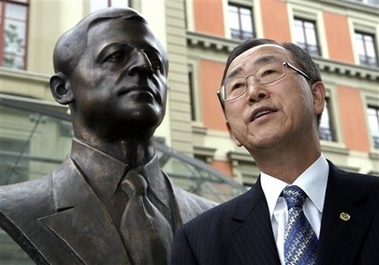
Sergio Vieira de Mello of Brazil, who was killed in a terror attack in Baghdad while serving as Secretary-General Special Representative in Iraq, has been the United Nations High Commissioner for Human Rights begining on 12 September 2002 after the UN General Assembly approved his appointment by Secretary-General Kofi Annan.Until May 2002, Mr. Vieira de Mello was the United Nations Transitional Administrator in East Timor. Prior to that, he briefly held the position of Special Representative of the Secretary-General in Kosovo, following a year and a half serving at Headquarters as Under-Secretary-General for Humanitarian Affairs and Emergency Relief Coordinator. He has been with the Office of the United Nations High Commissioner for Refugees since 1969, culminating in his appointment as United Nations Assistant High Commissioner for Refugees in January 1996. He has extensive Headquarters and field experience in humanitarian and peacekeeping operations, including in Bangladesh, Sudan, Cyprus, Mozambique, Peru and Lebanon. Mr. Vieira de Mello has also served as Special Envoy for the United Nations High Commissioner for Refugees for Cambodia, Director of Repatriation for the United Nations Transitional Authority in Cambodia (UNTAC), Head of Civil Affairs of the United Nations Protection Force (UNPROFOR), as well as United Nations Regional Humanitarian Coordinator for the Great Lakes region of Africa. Mr. Vieira de Mello studied in Brazil and France, receiving a doctorate from the University of Paris (Panthéon-Sorbonne). Born on 15 March 1948, he is married and has two sons. 29 August 2003.
Link,http://www.un.org/News/dh/iraq/demello-bio.htm, consultado a 2 de Setembro de 2006

Actualização feita a 25 de Março de 2008:

Sergio Vieira de Mello
Biography


Sergio Vieira de Mello was born on March 15th 1948 in Rio de Janeiro, Brazil. He lived abroad from a young age having had a father who was a diplomat and a historian. Once back in Brazil, Sergio finished his secondary school education in the Lycée Franco-Brésilien in Rio, graduating with a baccalaureate in Classical Literature. In 1966, in an effort to be close to his father, then Consul General in Frankfurt, Germany, Sergio moved to Switzerland to study philosophy at the University of Fribourg. He subsequently moved to Paris to pursue his education, graduating with a Bachelor’s degree in 1969 and a Master’s degree in 1970, both in Philosophy from the Sorbonne University.
Sergio joined the Office of the United Nations High Commissioner for Refugees (UNHCR) as a
French Editor when Sadruddin Aga Khan was High Commissioner. While holding this position, he finished his third cycle Ph.D in 1974 (with honours) at the Sorbonne. He later obtained his “State Doctorate” in 1985.
Following the proclamation of independence of
“East Pakistan” in December 1971, UNHCR undertook an unprecedented repatriation operation. In the context of this gigantic undertaking, Sergio Vieira de Mello then aged 23, was sent to Dhaka to work on ensuring the successful repatriation and reintegration of the Bengali refugees who fled to India to escape the civil war. In the five months of that assignment, Sergio was a witness to the birth of a new state—Bangladesh.
In the summer of 1972, Sergio was again assigned to the field to help in another
UNHCR operation in South Sudan. Again at the young age of 24, he actively participated in the repatriation and reintegration of hundreds of thousands of South Sudanese refugees who had fled the country during the civil war. Upon returning to Europe, he got married in France in the summer of 1973 to Annie.
In the following year, Sergio was assigned to
Cyprus, first to South Nicosia, then to North Nicosia as the Head of the UNHCR programme for the island.
On June 25th 1975,
Mozambique, a former Portuguese colony, became independent, Sergio, accompanied by his wife Annie, left for Mozambique to take charge once again of the repatriation operation and the reintegration of Mozambicans who had fled the country during the war. When the UNHCR Representative in Maputo completed his assignment, Sergio, at age 28, took command of the UNHCR office in the country becoming one of the youngest UNHCR Representatives in the field.
In the beginning of 1978, Sergio was named
Regional Representative for UNHCR to Peru. Sergio was just turning 30. He left with his family for Lima where their first son, Laurent was born in mid-1978. Sergio and his family stayed in Peru for two years while essentially negotiating the repatriation, particularly to Europe, of thousands of Latin American refugees who had initially gone to Chile under the Allende regime, and later fled to Peru following the coup d’Etat of Augusto Pinochet.
In January 1980, Sergio returned to Geneva to take up a post in the
Personnel Division of UNHCR where he was responsible for shaping the careers of many international civil servants. His second son Adrien was born in the same year.
In November 1981, after having spent 20 months in Geneva, Sergio was seconded by UNHCR as
Political Affairs Advisor to the United Nations Interim Forces in Lebanon (UNIFIL). This first experience, as part of a peace-keeping operation, led him to appreciate the complexities of such operations and drew him close to the military. In July 1983, Sergio Vieira de Mello returned to Geneva to resume his functions in the Personnel Division at UNHCR Headquarters.
He spent the next ten years at the Headquarters occupying different positions within the organization. During that decade, he would be named to serve in Buenos Aires, only to be quickly recalled when the new High Commissioner Jean-Pierre Hocké took office in 1986, to serve as his Chef de Cabinet. Sergio benefited from the period of stability in Geneva to finish his doctorate thesis “Civitas Maxima” for which he received a “very honourable “mention from The Sorbonne in Paris in December 1985.
During the years spent at UNHCR Headquarters, Sergio occupied the position of
Chef de Cabinet to the High Commissioner, Secretary of the Executive Committee and in May 1988 he became Director of the Asia Bureau and subsequently occupied the post of Director for External Affairs. In the context of his work in the Asia Bureau, he was the main initiator of the Comprehensive Plan of Action (CPA) which put an end to the exodus of the Vietnamese “boat people”, who were still leaving Vietnam ten years after the end of hostilities. For that purpose, Sergio managed to bring all stakeholders to the negotiating table, notably the administrations in Washington and Hanoi, which in 1980 was an accomplishment, as the scars of the Vietnamese war were far from healed in both countries.
At the end of 1991, the new High Commissioner for Refugees, Mrs Sadako Ogata, named Sergio as her Special Envoy in Cambodia. He simultaneously assumed the responsibility of the
Head of the Division of Repatriation of the United Nations Transitional Authority for Cambodia (UNTAC). This operation was considered a successful one for the United Nations. In June 1993, around 370,000 Cambodians returned home to their villages.
On returning to Geneva in the summer of 1993, Sergio had to leave again in the autumn of the same year to Bosnia to take part in a peace-keeping operation. In October 1993, he became the
Political Director for UNPROFOR in Sarajevo, then in April 1994, he was stationed in Zagreb as Head of Civil Affairs.
Sergio returned to UNHCR Headquarters in Geneva in October and became
Director of Planning and Operations. One of the main accomplishments in this post was the organization of the Conference on Refugees and Population Movements in the Community of Independent States (CIS). The Conference took place in Geneva in May 1996 and adopted a Plan of Action, the goal of which was to control and channel the influx of migration as a result of the break up of the ex-Soviet Republics. In January 1996, Sergio was promoted to the position of Assistant Secretary-General and became the first Assistant-High Commissioner for Refugees.
In October 1996 Sergio Vieira de Mello was again detached from UNHCR and named as
Special Envoy of the Secretary-General for the Great Lakes Region. He performed the functions of Humanitarian Coordinator for the three months of his assignment (October-December 1996). He returned to Geneva at the beginning of 1997 to resume his functions as Assistant High Commissioner in UNHCR.
In January 1998, Mr. Kofi Annan, who took office as Secretary-General of the United Nations a year earlier, appointed Sergio Vieira de Mello as
Under Secretary-General for Humanitarian Affairs and Head of of the Office of Coordination of Humanirarian Affairs (OCHA) in New York. Sergio undertook, at the request of the Secretary-General, an evaluation mission to Kosovo (UNMIK). Upon his return to New York, he delivered his report to the Security Council and was shortly afterwards named by the Secretary-General as his Special Representative in charge of the United Nations Interim Mission in Kosovo (UNMIK). Upon his return to New York in July 1999, he resumed his function as Head of OCHA.
In November 1999, after the Security Council adopted a resolution on September 15th creating the International Forces of Intervention (INTERFRET) and a subsequent resolution on 25th October creating the United Nations transitional Authority for East Timor (UNTAET), Sergio Vieira de Mello took over as
Administrator of UNTAET in Dili. From November 1999 until April 2002, Sergio was the de-facto Governor of East Timor. Timor Leste was later created on May 20th 2002 with Xanana Gusmao becoming its first President.
In September 2002, Sergio was named by the Secretary-General, Kofi Annan, as
High Commissioner for Human Rights, based in Geneva. He remained in his new post until the end of May 2003, when the Secretary-General, asked him to serve as his Special Representative in Baghdad for four months. Sergio arrived in Iraq on June 2nd 2003. On July 22nd , he delivered his report on the situation in Iraq to the Security Council, noting the particularly difficult conditions under which the United Nations had to work in the country.
Sergio Vieira de Mello was killed in Baghdad, with 21 of his colleagues, in
the bloodiest attack that ever targeted the United Nations in its long history, on the afternoon of August 19th.The world was stunned. The deep sense of loss that accompanied Sergio’s tragic abrupt departure grew into a swell of unprecedented grief and despair. It is difficult to select what sentiment best represented the mood of gloom and emptiness worldwide that followed Sergio’s untimely departure but one obituary stand out because of its sheer simplicity... it came from the heart.
Former UNHCR Assistant High Commissioner and close friend Kamel Morjane (presently Tunisia's Defense Minister): "At the UNHCR, where he spent 25 years of his life, he was the brilliant son that his elders would have wished to have. For his peers, like me, he was the colleague or the friend, often both, that one tried to emulate and hold up as an example, but one was never able to equal".
Throughout his long illustrious career, Sergio was supported, encouraged and protected quietly from behind the scene by his wife Annie as both watched with pride their sons Laurent and Adrien grow and bloom into successful young men. As a family, they will continue to miss their beloved Sergio very dearly.
After lying in state in his native Rio de Janeiro, Brazil, and Geneva, a city that had become a second home to him and whose citizens lined the streets to pay him their last respects, Sergio Vieira de Mello was laid to rest in the Cimetière des Rois (the Cemetery of Kings) in Geneva on 28th August 2003.
May his soul rest in eternal peace

Fonte,http://www.sergiovdmfoundation.org/en/sergio_biography.html, consultada a 25 de Março de 2008

Tombeau de mes amis assassinés

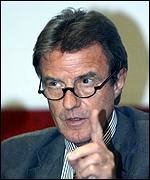
Par, Bernard Kouchner * ancien Haut Représentant des Nations Unies au Kosovo, cofondateur de Médecins sans frontières, fondateur de Médecins du monde, ancien ministre délégué à la santé.

"Ils étaient de toutes les vraies batailles, celles qui nous honorent parce qu'elles ont pour enjeu la paix, la justice, la démocratie, la protection des faibles. Ils s'appelaient Sergio Vieira de Mello, Nadia Younès, Jean-Sélim Kanaan, Fiona Watson et bien d'autres. Ensemble, au Kosovo et ailleurs, nous avions partagé des fraternités, des espoirs, des promesses que la barbarie a saccagés. Ils sont morts à Bagdad, assassinés, pour ce qui nous fait vivre : agir sur le terrain, sans relâche, pour que le monde soit moins stupide et moins sanglant. Ils sont morts comme ils avaient vécu, avec courage, avec talent, avec lucidité aussi, au service d'une communauté internationale oublieuse, versatile et ingrate. Au-delà de leur tâche, délimitée par un mandat étriqué du Conseil de sécurité de l'ONU, facilement critiquée dans nos pays encore paisibles : à la marge du commandement anglo-américain, ils tentaient d'établir un dialogue, d'amorcer les réconciliations, d'empêcher tout fanatisme. Leurs corps ont été dégagés tant bien que mal des décombres du siège à peine gardé de la mission de l'ONU. Avec eux ont péri ou ont été blessés des dizaines d'Irakiens. Pas un soldat américain. Après avoir attaqué l'ambassade de Jordanie, pays d'islam modéré, les terroristes ont pris pour cible le symbole de neutralité et de paix que sont les Nations unies. Sergio n'était pas seulement le beau et courageux diplomate brésilien qui passait d'une guerre à l'autre, d'une mission impossible à un poste plus exposé encore. J'en témoigne depuis plus de trente ans qu'il était mon ami : il était un homme politique engagé à gauche, un militant des droits de l'homme, un juste. De l'Amérique latine à l'Afrique, des Balkans au Timor-Oriental, il avait marqué de son élégance et de son charme, de son obstination aussi et de sa fidélité amicale à Kofi Annan une nouvelle forme de diplomatie de l'ingérence que je considère comme la véritable globalisation des espérances. Nadia était ma princesse égyptienne. Après une brillante carrière au siège et à Rome, elle régnait sur l'information et le protocole des Nations unies. Puis elle avait préféré le terrain et, pendant deux ans, elle avait rejoint notre mission du Kosovo, faisant preuve d'une efficacité et d'un sens politique remarquables, accueillant sur son cœur toutes les peines, tous les doutes, toutes les craintes qui nous étreignaient et les chassant de son rire rauque, de sa tendresse de Méditerranéenne. Brièvement elle passa par l'Organisation mondiale de la santé (OMS), avant de gagner l'Irak. Le secrétaire général venait de la rappeler à ses côtés à New York, la nommant secrétaire adjointe des Nations unies. Jean-Sélim Kanaan, je le considérais comme un fils. Un vrai jeune homme du monde, trois nationalités, un seul dévouement. Un mélange de juvénilité et de grandeur. Parlement européen, Harvard, Bosnie, Kosovo : volontaire partout et dans les pires endroits, il avait raconté ses déceptions et ses espoirs dans un livre récent (Ma guerre contre l'indifférence, Robert Laffont, 2002). Il venait d'épouser Laura, elle aussi une téméraire du Kosovo, qui avait administré seule une des municipalités les plus difficiles et les plus dangereuses. Leur fils, Mati-Sélim, a tout juste trois semaines. Il faudra beaucoup lui dire, à ce garçon, combien son père était gentil et brave. Fiona Watson, Ecossaise, brillante politologue, s'était engagée à l'Organisation pour la sécurité et la coopération en Europe (OSCE) pour organiser les premières élections libres au Kosovo. Elle y devint ma conseillère politique avant de rejoindre à New York le bureau des missions de paix et de se porter volontaire pour Bagdad. Qui a tué nos amis ? Des enquêteurs patentés chercheront. Peut-être ne trouveront-ils pas la signature précise de cette attaque avant que d'autres bombes, d'autres voitures piégées, des attentats-suicides semblables n'étendent leurs ravages. Nous savons déjà que les responsables, qu'ils viennent d'Al-Qaida, d'Al-Ansar, des héritiers de Saddam, fondent les nationalités et les idéologies dans une même haine. Intolérance, fanatisme et extrémisme religieux se conjuguent et tirent profit des graves erreurs d'appréciation et de l'impréparation des conseillers de M. Bush. Les missions de paix ne s'improvisent pas : elles ont leur pédagogie, et leurs apprentissages. Qui a tué nos amis ? L'intolérance, et le goût inaltérable de la dictature. Que visent-ils, ces fanatiques ? Qui viseront-ils désormais ? La succession des crimes porte la marque de fabrique des intolérants pathologiques. Certains ont-ils naïvement pensé que les meurtres ne viseraient que des Américains ? A l'ambassade de Jordanie, on a assassiné les tenants d'un islam de raison, respectable et respecté. A l'ONU, nos amis morts Sergio, Nadia, Jean-Sélim, Fiona, représentaient une communauté de pensée rebutée par le simplisme violent d'une partie de l'administration américaine. Ils voulaient donner aux Irakiens les clés de leur maison devenue démocratique. Quant à nous, comme trop souvent drapés dans nos certitudes, ne nous croyons pas protégés contre la barbarie. La tiédeur des Européens à maintenir leurs alliances avec les Américains et les Britanniques ne les protège pas. Ceux qui le pensent commettent une redoutable erreur d'analyse. Bientôt, les Américains ne seront plus les seules cibles des fanatiques, mais tous les Occidentaux, tous les démocrates, tous les croyants trop modérés, et d'abord les femmes. Tous ceux-là qui seront visés réagiront-ils avant qu'il ne soit trop tard ? J'ai conscience, en écrivant cela que tous les gens raisonnables, tous les hommes et les femmes de religion, de foi et de tendresse savent que je n'attaque pas leur croyance. Mais le fanatisme s'en chargera.A Bagdad, c'est la communauté internationale que l'on a voulu assassiner. Que peut-on faire maintenant ?Continuer à tout prix la lourde tâche à laquelle nos amis s'étaient attelés. S'obstiner à arrêter les assassins, à désarmer les affidés du dictateur Saddam Hussein dont on ne sait plus s'il a seulement tué 500 000 ou près de 4 millions d'Irakiens comme cela se dit à Bagdad. Nous devons poursuivre la trace de nos valeureux amis, et donner par des élections le pouvoir aux Irakiens. A cette fin, il est urgent d'élargir le mandat des Nations unies en leur donnant la mission et les moyens de reconstruction et de démocratisation de l'Irak. Si une résolution précise est enfin votée, alors un mandat clair sera fourni à la communauté internationale qu'il nous conviendra de remplir en coordination avec le Conseil provisoire irakien. Avec des soldats pour les tâches militaires, des policiers pour l'indispensable sécurité et la tranquillité des familles, des techniciens pour rétablir l'électricité, la distribution d'essence, l'essentiel de la vie quotidienne, des volontaires civils pour la mise en place des partis politiques et la préparation des élections... La France, compte tenu de ses positions antérieures, se montrerait bien inspirée en prenant l'initiative de cet indispensable élan collectif. Nos ennemis ne sont pas les Américains, mais bien le terrorisme. Encore faut-il que les Américains comprennent que c'est aussi leur intérêt. Sinon, nous dirons bientôt que Beyrouth n'était rien à côté de Bagdad. Adieu Sergio, Nadia, Fiona, Jean-Sélim et les autres, qui nous représentiez si bien. Vous êtes tombés au champ de bataille en soldats de la paix. Un morceau de mon cœur repose à vos côtés. Un lambeau des dernières innocences humanitaires, un peu de l'espoir de l'humanisme vont être portés en terre avec vous. Bernard Kouchner "
Fonte : LE MONDE 22.08.03

* Le 18 Mai 2007 Monsieur Bernard Kouchner a été nommé Ministre des Affaires Étrangères et Européennes.

Sunday, August 27, 2006

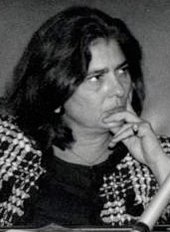
In Memoriam Nadia Younes


NadiaYounes


Licenciada em Literatura inglesa pela Universidade do Cairo, obteve o Mestrado em Ciências Políticas e Relações Internacionais na Universidade de Nova York. Era fluente em Inglês, Francês e Árabe.
Serviu 33 anos nas Nações Unidas. Integrou o Secretariado das Nações Unidas em 1970. A partir de 1974 exerceu diversas funções ligadas ao Departamento de Informação Pública, antes de ser nomeada para Diretora do Centro de Informação das Nações Unidas em Roma. Em seguida regressou a Nova York como Directora da Divisão de mídia no Departamento de Informação. Foi Chefe do Protocolo das Nações Unidas a partir de 1998. De Julho de 1999 a Janeiro de 2001 trabalhou em missão no Kosovo onde era responsável pelo Gabinete de Informação e Comunicação do Representante Especial do Secretário Geral das Nações Unidas (Kofi Annan), Bernard Kouchner.
Em Junho de 2002 foi nomeada directora-executiva e responsável pelo Departamento de Relações Exteriores da Organização Mundial da Saúde (OMS).
Em Maio de 2003, Nadia Younes foi escolhida para directora do gabinete de Sergio Vieira de Mello para o Iraque. Morreu com os seus 21 colegas de missão da ONU no Iraque, entre os quais Sergio Vieira de Mello, quando do atentado terrorista de 19 de Agosto de 2003 à sede da ONU em Bagdad.
Nadia Younes foi sepultada no Cairo, Egipto.
Fonte: ONU

Links exteriores
Nadia Younes Memorial Lecture series
Mensagem do Secretário-geral das Nações Unidas Kofi Annan
Nadia Younes
CIMUN: In Memory of Nadia Younes
Gone too soon